~America~
The Yacht That Inspired the America's Cup ~ 1851
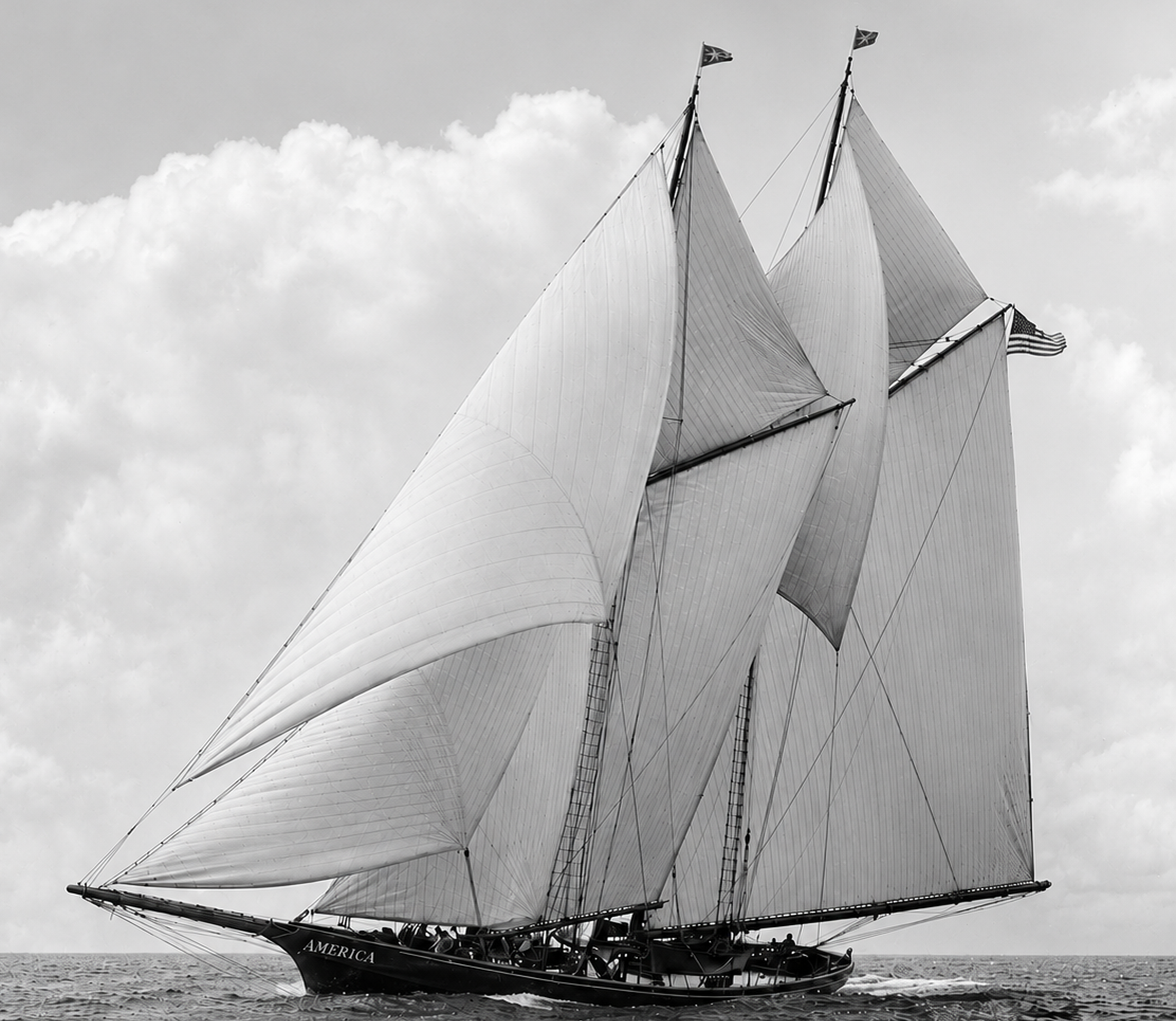
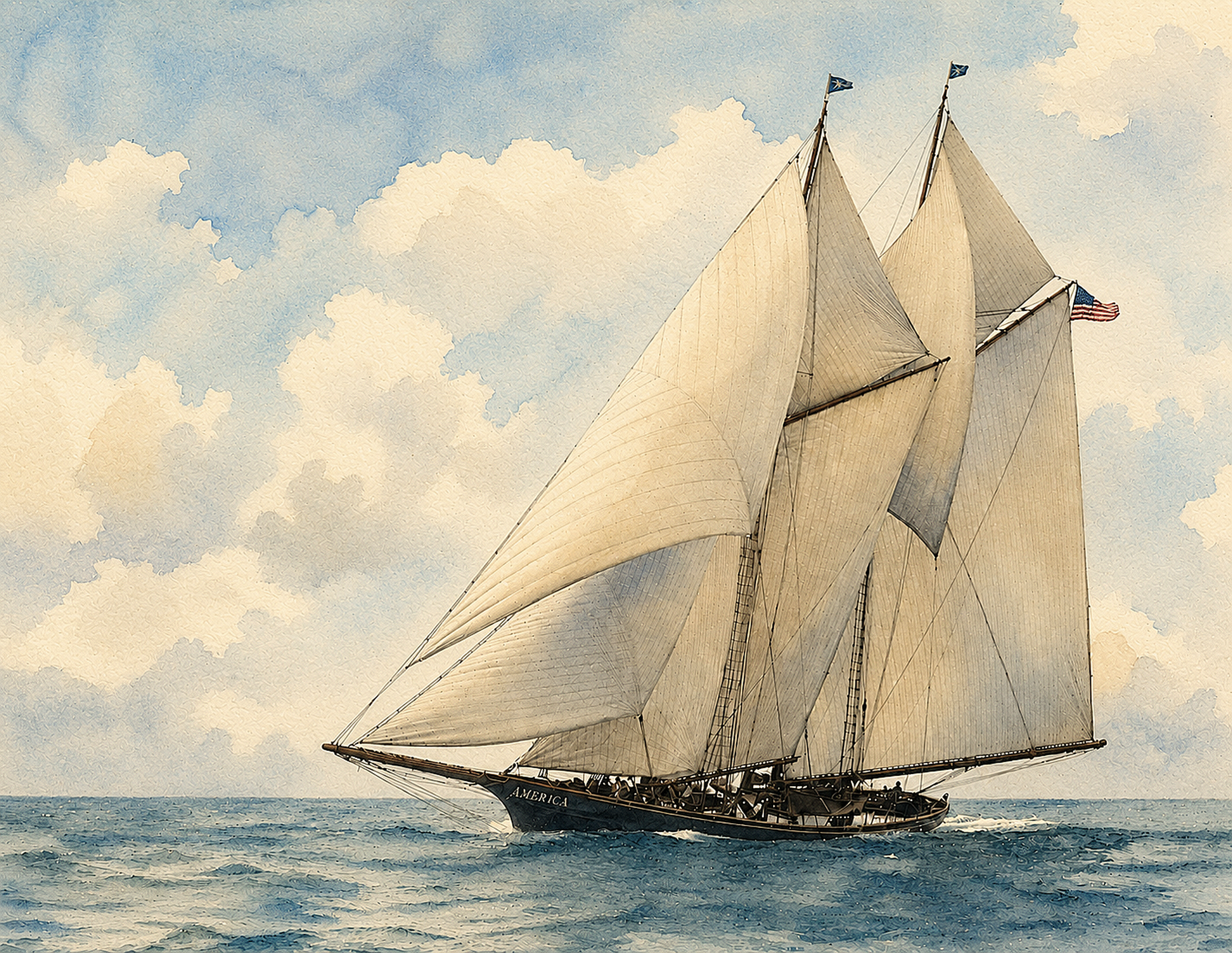
In the summer of 1851, a sleek black schooner from the young United States crossed the Atlantic to challenge the finest yachts of Great Britain during the celebrations surrounding London's Great Exhibition. Her name was America, and the remarkable victory of the yacht America in what was then known as the Hundred Guinea Cup would inspire the international sailing competition that the world now knows as the America's Cup.
On August 22, 1851, before royalty, aristocracy, naval officers, and thousands of spectators gathered along England's southern coast, America competed against fifteen of Britain's most celebrated racing yachts for the prestigious Hundred Guinea Cup, presented by the Royal Yacht Squadron. The challenging 53-nautical-mile course circumnavigated the Isle of Wight through shifting tides, changing winds, and hazardous coastal waters, providing a true test of seamanship and yacht design.
Designed by the brilliant American naval architect George Steers and owned by a syndicate of members of the New York Yacht Club, the yacht America represented a revolutionary approach to yacht construction. While British racing yachts were admired for their graceful, deep-bodied hulls, America's long, lean profile, finer bow, and clean run aft challenged conventional thinking. Many experienced British yachtsmen doubted that such an unconventional vessel could withstand the demanding conditions of the Solent and the waters surrounding the Isle of Wight.
The American syndicate had not crossed the Atlantic merely to compete. They intended to demonstrate that American shipbuilding and yacht design could equal—and perhaps surpass—the finest craftsmanship of the world's leading maritime nation. Their confidence rested not only in George Steers' innovative design but also in the exceptional seamanship of Captain Richard Brown, one of America's most respected pilots and racing captains.
Throughout the race, Captain Richard Brown sailed with remarkable patience and confidence, resisting the temptation to engage in risky tactical duels with the British fleet. Instead, he relied on America's superior speed, balance, and handling. As the wind freshened, the yacht America's revolutionary hull accelerated effortlessly, gradually widening the gap between herself and every challenger.
Near The Needles, America passed inside Nab Rock, taking advantage of a favorable interpretation of the sailing instructions. Several competitors protested, believing the Americans had taken an improper shortcut. After careful review, however, the Royal Yacht Squadron ruled that America had sailed entirely within the rules. Rather than diminishing the victory, the decision reinforced the fact that the Americans had combined superior seamanship with a masterful understanding of the course.
As the fleet approached the finish, Queen Victoria observed America's sails appearing first on the horizon and reportedly asked which yacht was in second place. The now-famous reply has become one of the most enduring legends in sailing history:
"Ah, Your Majesty, there is no second."
Although the trophy itself was worth only one hundred guineas, its legacy would become priceless. Upon returning to New York, the owners of America presented the trophy to the New York Yacht Club under a Deed of Gift, establishing a perpetual international challenge that became known as the America's Cup. The competition has since become the oldest trophy in international sport and remains one of the most prestigious prizes in competitive sailing.
For the next 132 years, the America's Cup remained in American hands, a remarkable record that reflected generations of innovation, exceptional yacht design, and outstanding seamanship. What began as a single international challenge evolved into sailing's premier competition, attracting the world's finest naval architects, designers, and yachtsmen.
Today, the victory of the yacht America in the 1851 America's Cup stands as one of the defining moments in maritime history. George Steers' revolutionary design demonstrated that innovation could triumph over tradition, while Captain Richard Brown's disciplined race management showcased the highest standards of seamanship. Together, they not only defeated the finest yachts of Great Britain but forever changed the course of competitive sailing.
More than a century and a half later, the yacht America remains one of the most celebrated vessels ever built. Her victory transformed a single race into an enduring international competition that continues to inspire sailors around the world. Every America's Cup challenger and defender can trace its heritage back to the revolutionary schooner that crossed the Atlantic in 1851.
Masters of the Wind commemorates this extraordinary achievement through a museum-quality presentation celebrating the yacht, her historic victory, and the race that forever changed sailing history. Each handcrafted piece combines restored historic imagery, authentic race charts, and carefully researched historical information, preserving the legacy of the yacht America and the birth of the America's Cup for collectors, sailors, historians, and maritime enthusiasts alike.